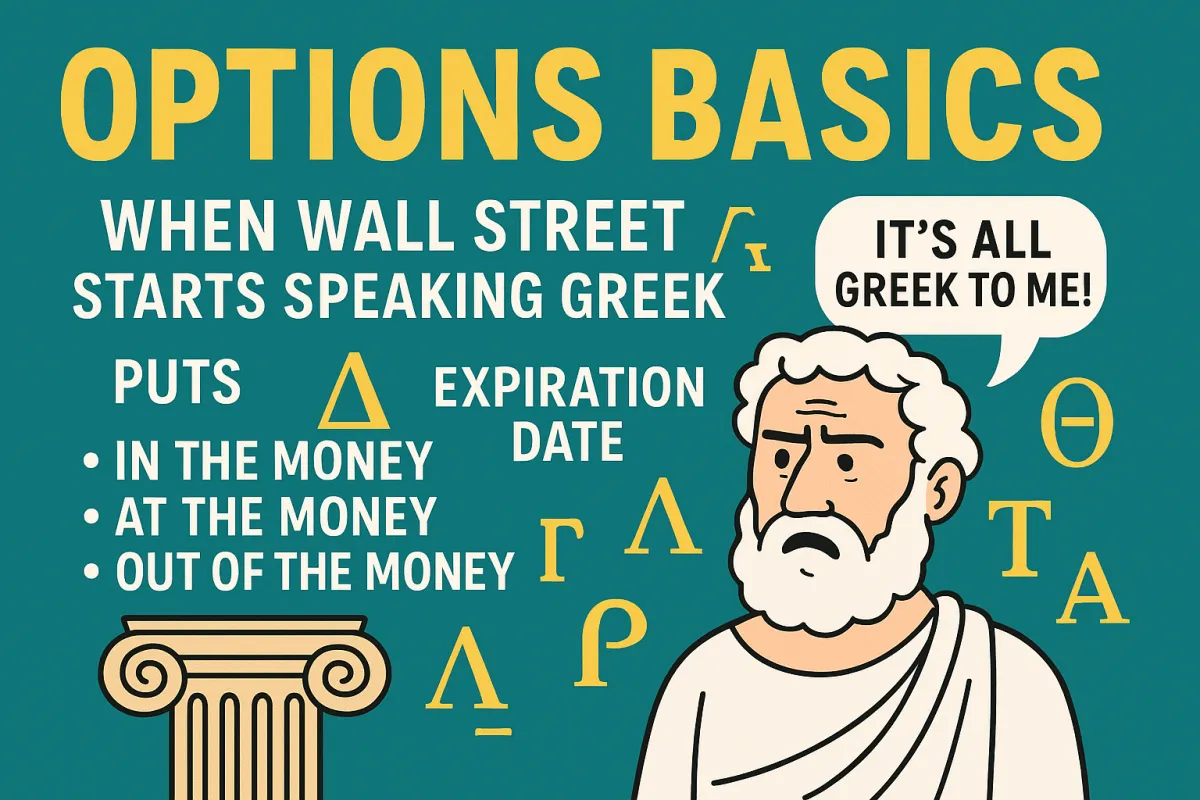
Option Basics
Option Basics -> What are options and how do they work. An option is a derivative instrument because its value comes from a different security. The most common is an underlying stock or index and the option either put or call derives its value from the price of its underlying instruments.
Contract -> An option is a contract between two parties a buyer and a sell. Every contract that is bought or sold must have another party take the other side of the contract.
Calls -> A call gives buyer the right but not the obligation to purchase the underlying security at the strike price at any time prior the end of trading on the day prior to expiration. The buyer may also try to sell or close out the contract(s) they have previously purchased. This may be at a profit or a loss. It is much more common to close out a winning trade than to exercise the right to purchase the underlying security. A seller has the advantage of getting income from selling the option contract but, they accept the obligation to sell at the strike price as the discretion of the buyer.
Puts -> A put gives the buyer the right but not the obligation to sell the underlying security at the strike price at any time prior to expiration. The right sell at any time is an American Style contract. There are a few indexes that only allow exercise at expiration. This type of contract is referred to a European Style expiration.
Expiration Date -> The date at which the contract will cease to exist.
Strike Price -> The price at which the buying or selling will take place.
Premium -> The price at which an options contract is bought or sold.


